Men are cruel, Man is kind (Jonathon Swift)
In his book, The God Delusion, Richard Dawkins flays religion for the evil done in God’s name:
Imagine, with John Lennon, a world with no religion. Imagine no suicide bombers, no 9/11, no 7/7, no Crusades, no witch-hunts, no Gunpowder Plot, no Indian partition, no Israeli/Palestinian wars, no Serb/Croat/Muslim massacres, no persecution of Jews as ‘Christ-killers’, no Northern Ireland ‘troubles’, no honour killings’… no Taliban to blow up ancient statues, no public beheadings of blasphemers… (1-3)
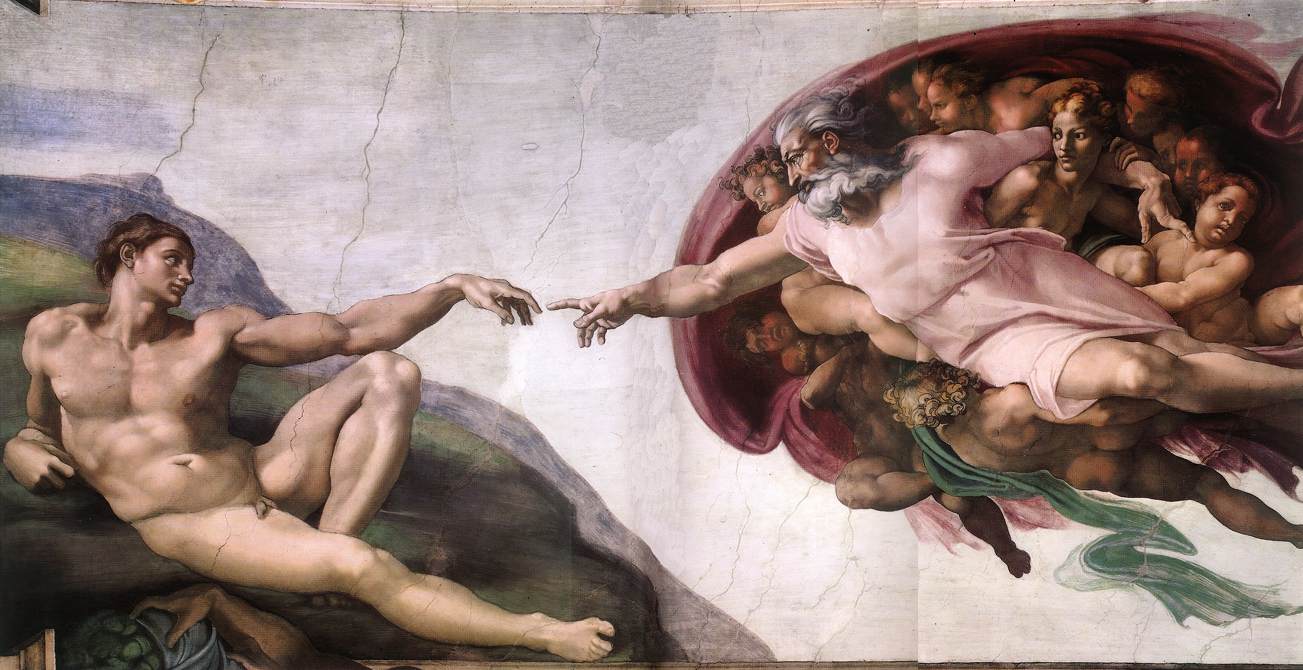
This is a fairly common stance for unbelievers. My father and brother-in-law led such attacks round many a family dinner table. Of course religion, or at least religious institutions, which is not the same thing, are implicated in these atrocities, but Dawkins’ stance ignores the good also done in the name of religion. Without religion there would have been no ancient (Buddhist) statues for the Taliban to blow up. And no Salisbury Cathedral, no Sistine Chapel, no Divine Comedy or Paradise Lost, no Matthew Passion, and none of the great Requiem Masses. In fact, since the language, ethics, law, literature and philosophy of Rome were kept alive in Christian monasteries throughout the Dark Ages, there would have been very little Western Civilization at all. And no Blue Mosque, no Mahabarata, no Sanjusangendo Temple. But of course that is not all that would have been lost. Such a stance focuses on the sins of intsitutionalized religion, but ignores the kindness inherent in the religious ideal. As William James says in The Varieties of Religious Experience, ‘There must be something solemn, serious, and tender about any attitude which we denominate religious.’ (38). This tenderness towards God and others is central to the Gospel: when a lawyer says that the chief commandment is ‘Thou shalt love the Lord thy God with all thy heart and with all thy soul, and with all thy strength and with all thy mind, and thy neighbour as thyself,’ Jesus endorses this with the Parable of the Good Samaritan. This same tenderness is reflected in St James’s epistle:
If a brother or sister be naked, and destitute of daily food, and one of you say unto them, Depart in peace, be ye warmed and filled; notwithstanding ye give them not those things which are needful to the body; what doth it profit? Even so faith, if it hath not works, is dead, being alone. (Jas. 2:15-17)
The Christian ideal is not about dogma, and certainly not about killing those who disagree with you: it is about kindness. Far from supporting institutionalized religion, Jesus challenged it – in his own lifetime he challenged the structures of institutional Judaism, and in our own time, as Orozco and Denys Arcand’s film, Jesus of Montreal suggest, he would almost certainly challenge the power structures of the Christian faith. In doing this he would not be attacking the structures themselves, but the inevitable corruption by power and greed that are so common within structures and institutions, even when the ideal, the mission statement that motivates them is sound: ‘Think not that I am come to destroy the law, or the prophets: I am come not to destroy but to fulfill.’ (Matt 5:17)