Sunday, June 10, 2007

What am I to Do about Poverty and Suffering?


By


Charlotte Clutterbuck


Is the Institution the problem?


Men are cruel, Man is kind (Jonathon Swift)

In his book, The God Delusion, Richard Dawkins flays religion for the evil done in God’s name:

Imagine, with John Lennon, a world with no religion. Imagine no suicide bombers, no 9/11, no 7/7, no Crusades, no witch-hunts, no Gunpowder Plot, no Indian partition, no Israeli/Palestinian wars, no Serb/Croat/Muslim massacres, no persecution of Jews as ‘Christ-killers’, no Northern Ireland ‘troubles’, no honour killings’… no Taliban to blow up ancient statues, no public beheadings of blasphemers… (1-3)

This is a fairly common stance for unbelievers. My father and brother-in-law led such attacks round many a family dinner table. Of course religion, or at least religious institutions, which is not the same thing, are implicated in these atrocities, but Dawkins’ stance ignores the good also done in the name of religion. Without religion there would have been no ancient (Buddhist) statues for the Taliban to blow up. And no Salisbury Cathedral, no Sistine Chapel, no Divine Comedy or Paradise Lost, no Matthew Passion, and none of the great Requiem Masses. In fact, since the language, ethics, law, literature and philosophy of Rome were kept alive in Christian monasteries throughout the Dark Ages, there would have been very little Western Civilization at all. And no Blue Mosque, no Mahabarata, no Sanjusangendo Temple. But of course that is not all that would have been lost. Such a stance focuses on the sins of intsitutionalized religion, but ignores the kindness inherent in the religious ideal. As William James says in The Varieties of Religious Experience, ‘There must be something solemn, serious, and tender about any attitude which we denominate religious.’ (38). This tenderness towards God and others is central to the Gospel: when a lawyer says that the chief commandment is ‘Thou shalt love the Lord thy God with all thy heart and with all thy soul, and with all thy strength and with all thy mind, and thy neighbour as thyself,’ Jesus endorses this with the Parable of the Good Samaritan. This same tenderness is reflected in St James’s epistle:

If a brother or sister be naked, and destitute of daily food, and one of you say unto them, Depart in peace, be ye warmed and filled; notwithstanding ye give them not those things which are needful to the body; what doth it profit? Even so faith, if it hath not works, is dead, being alone. (Jas. 2:15-17)

The Christian ideal is not about dogma, and certainly not about killing those who disagree with you: it is about kindness. Far from supporting institutionalized religion, Jesus challenged it – in his own lifetime he challenged the structures of institutional Judaism, and in our own time, as Orozco and Denys Arcand’s film, Jesus of Montreal suggest, he would almost certainly challenge the power structures of the Christian faith. In doing this he would not be attacking the structures themselves, but the inevitable corruption by power and greed that are so common within structures and institutions, even when the ideal, the mission statement that motivates them is sound: ‘Think not that I am come to destroy the law, or the prophets: I am come not to destroy but to fulfill.’ (Matt 5:17)

Power or Poverty: is God omnipotent?


Dawkins inveighs against ‘the interventionist, miracle-wreaking, thought-reading, sin-punishing, prayer-answering God of the Bible, of priests, mullahs and rabbis’ (19): that is, he attacks the supposed religious view that God is omnipotent. But that is to oversimplify enormously the religious view of God. As John Macquarrie says, in creating others, God

• Limited his power and committed himself to his creation, leading to the incarnation and passion
• Gave a share of the responsibility to the creatures
• Made himself vulnerable
because there cannot be love, sharing and freedom ‘without the possibility of suffering on the part of him who loves and shares and confers.’ (The Humility of God, 1-4)


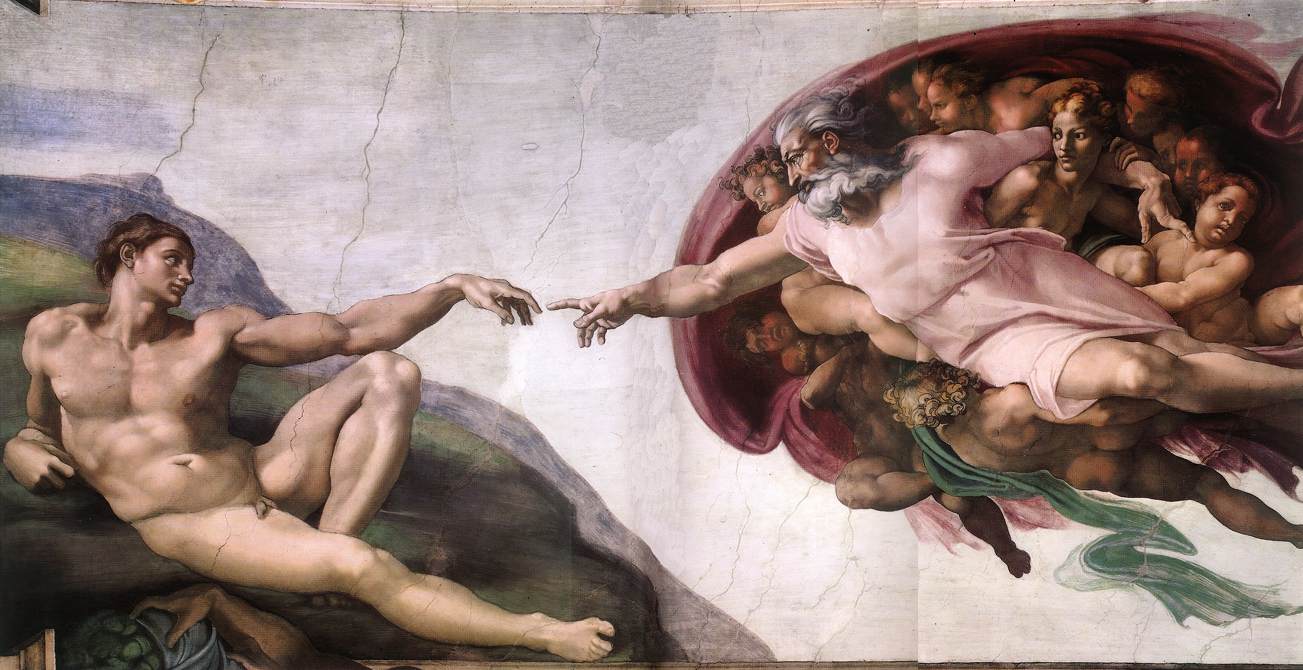
In Michelangelo’s ‘Creation of Adam’, God withdraws his hand, not seeking to control or possess, but allowing a space into which Adam can reach and grow. God’s left arm is resting on the Son who will endure the suffering that is a necessary consequence of creation.


In fact, it is through this very renunciation of power in creation that God becomes God – without that, he would be just formless energy.


It is in coalescing into matter and form that individuals arise and God enters into relationship with his creatures in time – God is a word that implies relationship. Can Einstein’s famous equation E = MC2 be reconfigured: God (energy) = matter and time/speed/movement?


God is not omnipotent, but rather, as William Langland says in Piers Plowman (c.1386), he became man in order to know our suffering.Elie Wiesel’s Account of Auschwitz, from his novel, Night:

Later, during the hanging of a child, which the camp is forced to watch, [Wiesel] hears someone in the crowd ask: Where is God? Where is he? Not heavy enough for the weight of his body to break his neck, the boy dies slowly and in agony, "struggling between life and death." Wiesel files past him, sees his tongue still pink and his eyes still clear, and weeps. Behind me, I heard the same man asking: Where is God now? And I heard a voice within me answer him: ... Here He is – He is hanging here on this gallows.


Does God demand Jesus's Death?


In the Christian tradition, Jesus has always shown solidarity with the poor. A famous example is the grisly Isenheim Alterpiece, painted for a monastery which had a hospital for patients with skin diseases and epilepsy.

In Michael’s lectures, I particularly liked the idea that God does not demand Jesus’ sacrifice. He demands fidelity to the project of liberating the poor and oppressed, and that is what leads to the Crucifixion. This model emphasizes God’s love for the poor and Jesus’s courage: it is closer to the old heroic model of redemption where God-in-Christ saves Man from the Devil out of love. St Augustine talks about this in his De Trinitate and it is the inspiration for the pictures of Jesus alive on the Cross in the heroic period, ‘the young hero’ as the Anglo-Saxon poem ‘The Dream of the Rood’ describes him (and also this crucifixion from the Coronation Sacramentary of Charles the Bald)
But, if God is present in all human suffering, it is even more imperative that humans should try to relieve suffering wherever they find it. Jesus presence on the Cross challenges us to do something about it – as in a poem I wrote about the broken crucifix in the cathedral in Nagasaki

in Urakame Cathedral
the head and arm are torn
from a Crucifix – a gaping hole
a mouth crying out
the remaining arm
an accusing finger

Where do I fit into the story of God’s incarnation of powerlessness?


Plays like Shakespeare’s King Lear and Akira Kurosawa’s film transformation of it, Ran, show that it is human greed, pride and folly that unleashes much suffering in the world. God holds us responsible for the suffering we have created, but he also embraces that suffering. Christ redeems us by giving us a chance to respond to his suffering by comforting or healing the suffering of others. Like the (possibly apocryphal) story of the statue of Jesus that had its arms blown off in World War II and someone put up a sign saying, ‘Christ has no hands but yours.’ http://www.americancatholic.org/Messenger/Feb2005/Family.asp
If abnegation of power makes God more fully himself, loss of power can make us poor, dependent on God, more fully human.
In King Lear, when Lear gives up his kingdom, banishes his good daughter, puts himself at the mercy of his wicked daughters, and becomes powerless, destitute and mad, he begins to discover himself, particularly his responsibility for the poor that he has ignored:
Poor naked wretches, wheresoe’er you are,That bide the pelting of this pitiless storm,How shall your houseless heads and unfed sides,Your looped and windowed raggedness, defend youFrom seasons such as these?
…. O, I have ta’en too little care of this. (3.4.28)

Liberation theology tells us that God has a radical preference for justice toward the poor – that Jesus appeared first to shepherds, and that he spent his time with fishermen, prostitutes and tax collectors. If I believe in God I must also demonstrate this engagement with the poor and outcast.

When I read 'A New Way of Encountering God', I was struck by
The here-and-nowness that LT deals with
That we are all theologians and that theology is a love letter to God
That God (as I firmly believe) s a mystery that none of us can penetrate, and that intellectual modesty is essential
That theology's love letter changes with time
When I came to the part about Commitment being the first act and theology the second, my heart began to burn within me (sorry to be mushy but that is what it felt like) - I so want to find a way of committing myself in this area - have been feeling this for some years now, but not sure how I can do it. I do encounter poor people to some extent in volunteering a little with refugees in Blacktown, but this is mild compared with the problems of Africa or Latin America.
I was moved by the three main parts of LT - liberation from:
unjust social structures
the power of fate
personal guilt or sin
Reflecting that I do have a growing desire to confront the structural causes of injustice, I realized that in some ways I already do this - that friends and colleagues and family seem to find it helpful to talk to me, especially when they are struggling to release their creativity from the social constraints that inhibit it. I had a very strong sense too, that a particular friend is actually one of the poor in spirit, who asks for my love in a very special way that liberates both of us from some of our past fears and unhealthy patterns. This led me to reflect on the moments of poverty of spirit in my daughter and husband - moments when they need me to listen and be with them. This too is an obligation.

Is a radical preference for the poor a Judeao-Christian idea, or is it at the heart of any ethical system?

But although Christian teaching underlines the importance of this duty, and gives us insight into how and where we might do this, this duty is not just the preserve of Christians: in Piers Plowman, Langland complains that Christians are less charitable than Jews; my Muslim friends talk about the duty to help the poor and are always helping each other; in today’s Sydney Morning Herald (9.6.07) Peter Singer, who is, I believe, an atheist, argues that everyone in the rich world should donate 25% of their income to charities such as Oxfam (a practice he follows himself, and says so, believing that people follow by example); when my brother-in-law was dying a Buddhist group helped my sister to care for him.

And who is my neighbour?


When the lawyer told Jesus that ‘Thou shalt love the Lord thy God with all thy heart and with all thy soul, and with all thy strength and with all thy mind, and thy neighbour as thyself, Jesus told him to put this into practice. The lawyer asked, ‘And who is my neighbour?’ We too must use our minds in order to try to answer this question and work out how to use our finite physical and emotional resources effectively.

Is our neighbour the person who is near us?


Here is a story by Tolstoy


It once occurred to a certain king, that if he always knew the right time to begin everything; if he knew who were the right people to listen to, and whom to avoid; and, above all, if he always knew what was the most important thing to do, he would never fail in anything he might undertake.
And this thought having occurred to him, he had it proclaimed throughout his kingdom that he would give a great reward to any one who would teach him what was the right time for every action, and who were the most necessary people, and how he might know what was the most important thing to do.

“Do you not see,” replied the hermit. “If you had not pitied my weakness yesterday, and had not dug those beds for me, but had gone your way, that man would have attacked you, and you would have repented of not having stayed with me. So the most important time was when you were digging the beds; and I was the most important man; and to do me good was your most important business. Afterwards when that man ran to us, the most important time was when you were attending to him, for if you had not bound up his wounds he would have died without having made peace with you. So he was the most important man, and what you did for him was your most important business. Remember then: there is only one time that is important— Now! It is the most important time because it is the only time when we have any power. The most necessary man is he with whom you are, for no man knows whether he will ever have dealings with any one else: and the most important affair is, to do him good, because for that purpose alone was man sent into this life!”

Leo Tolstoy, ‘Three Questions’

On the whole, I tend to agree with Tolstoy, that the people next to us are the most important – the ones whom we betray if we do not help them when they need us to (ironically, of course, Tolstoy abandoned his family at the end of his life). Weh Socrates was offered the choice of exile or death, he chose to die, despite the distress of his wife and children. In John Bunyan’s Pilgrim’s Progress, Christian abandons his protesting wife and children to complete his quest for salvation. I have always been rather repelled by both Socrates and Christian, but I admire the character Mordecai in George Eliot’s Daniel Deronda. Mordecai is about to take ship for Palestine when he hears that his father has abducted his sister. He stays to help his mother, and dies of tuberculosis as a result.


Similarly, in Bleak House, Dickens criticizes Mrs Jellyby for her ‘Telescopic Philanthropy’ towards missions in Africa:

Mrs. Jellyby’s younger children are falling down the stairs, there is no dinner and no fire, the house is filthy and her eldest daughter is overworked, neglected and uneducated, yet Mrs Jellyby’s ‘handsome eyes… had a curious habit of seeming to look a long way off. As if… they could see nothing nearer than Africa!’

Charity begins at home?

Charity begins at home?
Think Global, act local?
Bloom where you’re planted?

In a world where over-consumption leaves our society in danger of ultimate collapse, it makes sense to work as far as possible in my local area. After all, if I do not reduce my ecological footprint, it is ultimately someone living in Kiribati who is likely to pay.

Living in a rich country, I can do a lot locally for the environment by reducing my eco-footprint:

• look for a job that I can reach by bike and train
• buy green power, and investigate cost of solar power
• install water tanks
• eat chickweed from my garden instead of buying lettuce
• grow edible instead of ornamental plants
• switch off lights
• reduce, reuse, recycle obsessively (I drive the cashiers crazy when I bring loose carrots and apples to weigh rather than use plastic bags – but I do use a bag for beans!)
• buy fair trade chocolate and coffee for home consumption and gifts
• buy kangaroo instead of beef (Red meat = 18- 34% of your eco-footprint; 150g less per week saves 10,000 litres of water, 300kg of greenhouse gas per year; not eating 0.5kg of beef saves as much water as not showering for an entire year).

In a global village, who is my neighbour?


In Jesus’ story of the Good Samaritan, the Samaritan, himself an outsider, is helping a complete stranger.

Is it enough to care for those who are close geographically?

Who were the poor that Jesus helped?


The crippled and sick
The hungry
The ignorant, like sheep without a shepherd
Sinners, prostitutes, tax-collectors

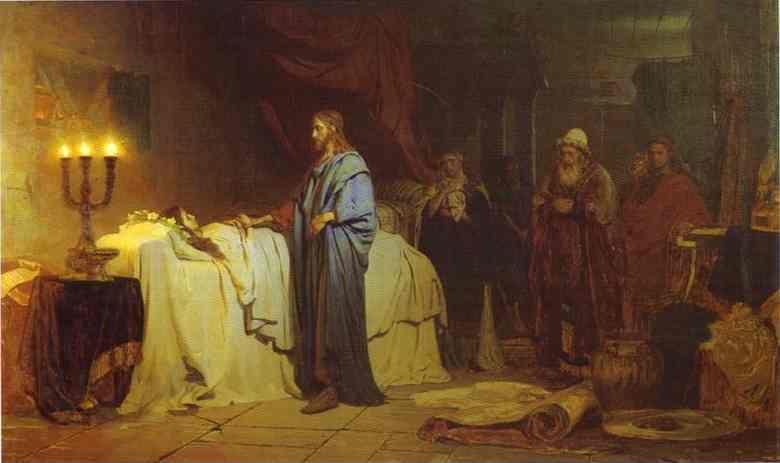
The rich (Jairus and the Centurion) in the poverty of their distress.
Anyone can be poor in spirit; anyone can have needs that must be addressed - even the wealthy students I teach.

Who are the poor in my life?

Those who lack power, education and resources, in Australia, but more in the 80%-world, especially Africa which has particular problems with climate, resources, access to transport

The poor in spirit
• Students who are gifted in music or art but whose parents pressure to study law or medicine
• Close friends and relations who may need comfort or support

Michael’s story of Juan Geradi and Fr Rigoberto was very challenging - I don't think I do feel a call to Latin America because I know that it would be hard on my family if I put myself in a situation of potential violence, but I was affected by his point of the importance of solidarity. I wonder how I can do this, not I think, through political action, but surely in some way through education, as I have such a great deal of experience in this area.

What are the pressing problems among ‘the poor’ who are my closest neighbours?

Indigenous health in Australia:

• Life expectancy non Aboriginal women = 82 years

• Life expectancy Aboriginal women = 64.8 years

• Life expectancy Torres Strait Islander women = 59.4 years

• Infant mortality 50% higher amongst Australian indigenous population than in New Zealand and USA

http://www.oxfam.org.au/campaigns/indigenous/health.php

How unfair is ‘charity’?

2001 donors and governments in spent US$250 million on HIV/AIDS in Southern Africa (US$3 per capita and US$27 per person living with HIV/AIDS). The annual amount needed for prevention and care is US$4.6 billion
(Human Sciences Resource Council)http://www.hsrc.ac.za/index.phtml


In 2005, the Australian Government announced an increase in Cancer spending of $189.4 million. That is approximately half what the world spent in total on HIV/AIDS in Southern Africa in 2001

What am I to do? I have ta’en too little care of this

Resources (as a woman in a rich democracy):
• Money (Which agency should I give to?)
• Teaching skills (How to apply them effectively?)
• Lobbying (How to gain leverage? Getup?)
• Time (One day a week – how to use it effectively?)

Responsibilities/ Constraints:
• Husband – needing to be able to retire
• Adult children, particularly my daughter, needing support
• 3 parents, aged 85-93
• Close friends who rely on me

Talents (What do I owe the gifts God has given me?)
• Writing and editing
• Teaching Literature, especially at senior high school or university level
• Teaching adults – who have missed out on education

Saturday, June 9, 2007

Live the Questions Now

Recently I was very moved by reading Rilke's letters. He actually suggests that humans are in the process of creating God - an idea I like:

...I would like to beg you dear Sir, as well as I can, to have patience with everything unresolved in your heart and to try to love the questions themselves as if they were locked rooms or books written in a very foreign language. Don't search for the answers, which could not be given to you now, because you would not be able to live them. And the point is to live everything. Live the questions now. Perhaps then, someday far in the future, you will gradually, without even noticing it, live your way into the answer.

Rainer Maria Rilke, 1903, Letters to a Young Poet

What does my heart say?


• ‘Doing good’ can be patronizing, naïve, dangerous for both parties
• ‘Helping’ is only possible if you have the attitude that you are learning more than you are giving
• ‘Helping’ is only possible if you are asked to do something that someone else needs, rather than deciding yourself what the need is. I was first able to relate to a severely disabled person when I met Doreen, a victim of cerebral palsy, by chance while staying with my cousin in Oxford in 1990. Taking Doreen up the stairs to the lantern of the Radcliffe Camera was arduous - Bob and I virtually carried her - but the look on her face when we got there was worth it!

But for me it is not enough to sit comfortably here, not really knowing what it is like in the 80%-world

How can I understand, honour and fulfill:

• The insights I learned from being with Doreen McColl and my Aboriginal students

• The pull towards Africa that I have felt towards Africa since meeting Germaine Acogny - and African dancer that I met when I was in Alice Springs with a group of my Aboriginal students in 1998

• My responsibilities to those you have given me to love

• The potential I feel to use the talents you have given me to the full
?


Twinkle twinkle in the light of the Holy Spirit?

At mass recently Father John Goulding told a story which comforted me enormously. Living where I do, in the remote Western Suburbs, it is rare for us to have any discussion of social justice issues in the pulpit. I have to say Jubilee 2000 was for us a farce of self-congratulation rather than an opportunity to examine our consciences and clean our slates. So this sermon was like a breath of fresh air. Fr John told us about the Polish pianist Paderewsky. A woman had taken her five-year-old son to one of Paderewsky’s concerts. Finding her seat in a front row, she started to chat to an old friend nearby. When the lights went up, there was her son sitting on the piano stool in the spotlight, picking out ‘Twinkle, twinkle little star’. Paderewsky came on to the stage, whispered to the boy, ‘Don’t stop playing,’ put his left hand round one of the boy’s shoulders and started to play the bass, put his right hand round the other and sarted to play a variation above. The audience was transfixed. No one remembers what else Paderewsky played that night, but everyone remembers ‘Twinkle, twinkle.’ Father John went on to say that faced with the problems of the world, we can wonder what our feeble talents and resources can possibly do to heal it, but that if we do our tiny bit, the Holy Ghost (it was Pentecost) can do the rest: by ourselves, we are just a feather, with the Holy Ghost, we have wings.Twinkle twinkle in the light of the Holy Spirit?